
Valencia City Districts
For years, Ruzafa has been the default recommendation for international buyers searching for property in Valencia. It combines central location, walkability, independent cafés, nightlife and renovated apartments in a way that feels immediately attractive to newcomers. Many people relocating from Northern Europe or the US see it as Valencia’s most recognisable lifestyle district. But the reality in 2026 is different from what many online guides still describe.
Ruzafa is no longer an “emerging” neighbourhood. Prices have risen sharply, competition for quality apartments remains intense and buyers increasingly find themselves compromising on size, natural light or building quality simply to secure a central location. For many international buyers, especially those buying property in Valencia as a foreigner for the first time, the question is shifting from “Should we buy in Ruzafa?” to “Is there better value nearby?”
That shift has brought growing attention towards En Corts and Monteolivete, two neighbouring districts that increasingly attract buyers looking for more practical long-term value without losing access to central Valencia.
These areas do not have the same international reputation as Ruzafa, at least not yet. However, they offer something many buyers now prioritise more highly: space, functionality and realistic pricing relative to location.
1. Why buyers are looking beyond Ruzafa
The Valencia property market has changed considerably since the pandemic. International demand has accelerated, supply levels remain tight and many of the city’s best-known neighbourhoods have become increasingly expensive relative to local salaries.
Across Valencia, inventory shortages have intensified competition for renovated apartments in central areas. Market analysis from 2024 and 2025 showed a sharp reduction in available housing stock alongside continued growth in international demand. Ruzafa has naturally absorbed much of that pressure.
Today, buyers searching for renovated homes for sale in Valencia inside Ruzafa often encounter smaller apartments at significantly higher prices per square metre. In many cases, the premium attached to the neighbourhood now outweighs the actual quality of the property itself. Buyers frequently compromise on natural light, outside space or building condition simply to secure a Ruzafa postcode.
That does not mean Ruzafa is overrated. It remains one of Valencia’s most dynamic urban districts and still performs strongly for rental demand. But many buyers now realise they can cross a single avenue into neighbouring districts and find noticeably better value.
This is exactly why En Corts and Monteolivete have become increasingly relevant for both lifestyle buyers and investors.
2. Where are En Corts and Monteolivete?
En Corts: central Valencia without the premium branding
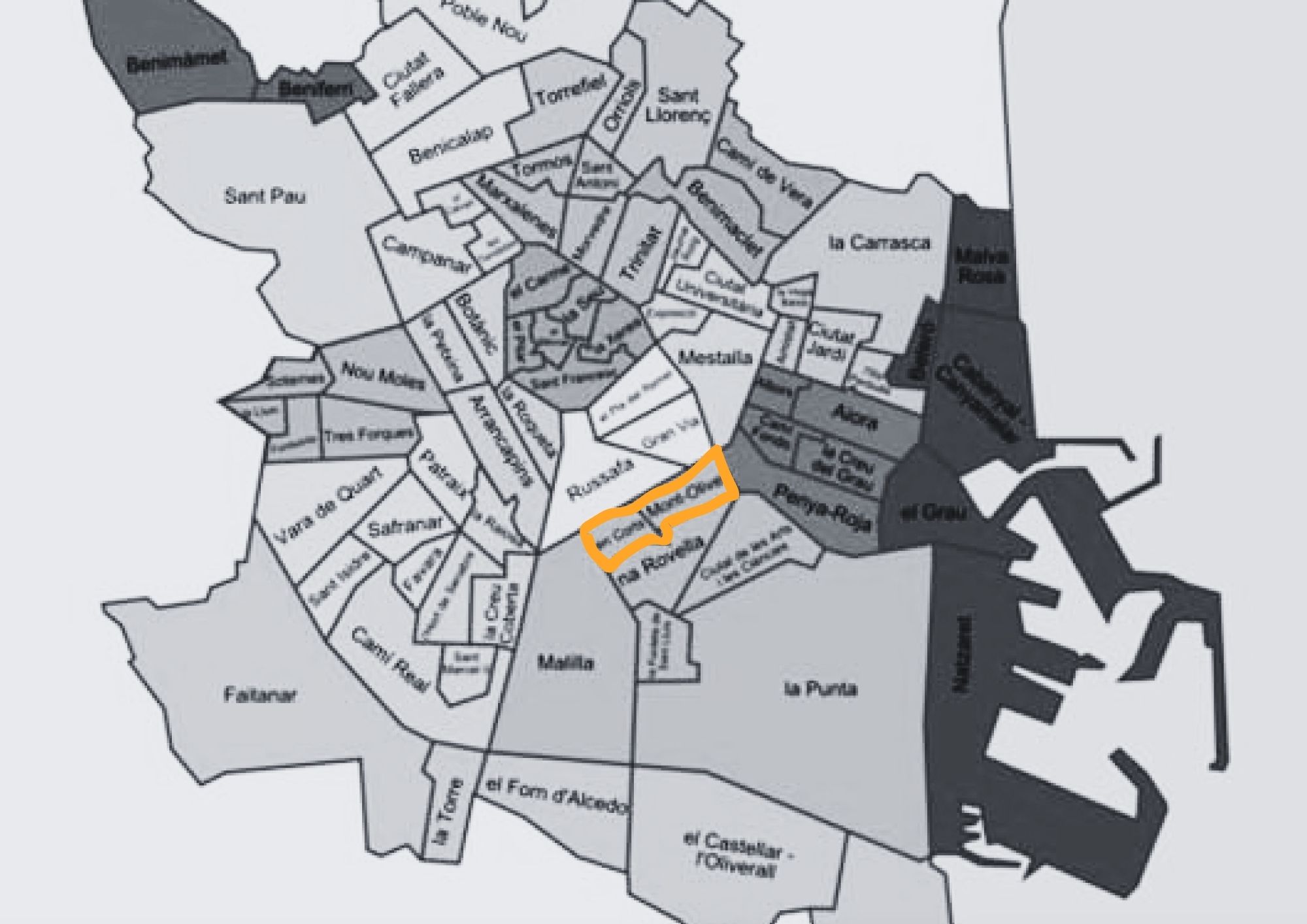
En Corts sits directly south of Ruzafa, bordering Quatre Carreres and close to Malilla. Many people unfamiliar with Valencia pass through it without realising they have left Ruzafa behind. That relative anonymity has worked in the neighbourhood’s favour.
Unlike heavily marketed districts, En Corts still feels primarily residential and local. Traditional bars, bakeries and independent businesses dominate the streetscape. You see fewer short-term tourists and fewer international chains. The atmosphere is calmer and noticeably less curated than central Ruzafa.
From an investment perspective, the location is difficult to ignore. Residents can walk into Ruzafa within minutes, access the Turia Gardens easily and reach the City of Arts and Sciences quickly by bicycle or public transport. Joaquín Sorolla station is also nearby, which matters increasingly for professionals splitting time between Valencia and Madrid or Barcelona.
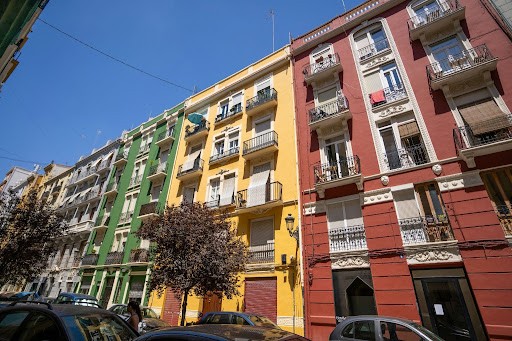
Architecturally, the area is mixed. Some streets feel attractive and increasingly modernised, while others remain visually uneven. Buyers expecting the polished aesthetic of prime central districts may initially find parts of En Corts less impressive. However, that inconsistency is also part of the reason pricing remains comparatively accessible.
In practical terms, buyers often secure larger apartments here for budgets that would only allow smaller renovated units inside Ruzafa itself.
Monteolivete: one of Valencia’s fastest-evolving districts
Monteolivete has changed significantly over the past five years. Historically considered a practical middle-class residential district, it is now attracting growing interest from international buyers, remote workers and investors seeking centrality without prime-district pricing. Its location plays a major role in that transformation.
Monteolivete sits beside the City of Arts and Sciences and benefits from excellent access to the Turia Gardens, the city centre and Valencia’s beach districts. Unlike some highly touristic neighbourhoods, it still functions mainly as a year-round residential area, which many buyers increasingly prefer.
The district also offers a housing stock that differs from older central Valencia neighbourhoods. Apartments are often larger, layouts can be more functional and buildings from the 1970s and 1980s frequently provide better natural light than narrow historic properties in Ciutat Vella or parts of Ruzafa.
That does not mean the area is “undiscovered”. Prices have risen steadily and demand has increased sharply since 2022. However, compared with Valencia’s most internationally recognised districts, Monteolivete still offers relatively strong value for buyers focused on long-term usability rather than prestige alone.
3. Why prices still remain comparatively accessible
One of the biggest misconceptions international buyers have about Valencia is that all central neighbourhoods now perform similarly on pricing. They do not.
Even though En Corts and Monteolivete border more established areas, they still trade at discounts relative to Ruzafa and parts of L’Eixample. In many cases, buyers can secure significantly more square metres for similar budgets.
The reasons are partly psychological and partly structural.
Ruzafa has become internationally recognisable. It appears repeatedly in relocation articles, influencer content and foreign investment guides. That visibility creates demand momentum which often pushes pricing ahead of fundamentals.
En Corts and Monteolivete remain more local in perception. They do not yet carry the same “brand value” internationally, despite offering similar practical advantages in terms of proximity and connectivity.
For buyers working with a buyer’s agent in Valencia, this distinction matters enormously. A district does not need international prestige to perform well over the long term.
Another important factor is renovation stock.
Both neighbourhoods still contain a large number of older apartments requiring modernisation. Buyers willing to undertake renovation work can often secure better layouts, larger terraces or more natural light than similarly priced apartments in prime districts.
That said, renovation projects in Valencia require realistic expectations. Delays remain common, community permissions can slow structural work and construction pricing has increased since 2023. We regularly advise clients to focus less on cosmetic perfection and more on underlying fundamentals such as location, building quality and long-term livability.
4. What daily life actually feels like
One reason many buyers ultimately choose En Corts or Monteolivete is because daily life feels more balanced.
Ruzafa remains lively and attractive, but it has also become noisier, busier and increasingly commercialised. Some streets now feel closer to short-term urban tourism zones than traditional Valencia neighbourhoods.
En Corts and Monteolivete sit somewhere between traditional local Valencia and the newer international version of the city.
That balance appeals particularly to remote workers planning permanent relocation, couples seeking centrality without constant nightlife and families prioritising practicality over trendiness. The café culture, local commerce and walkability remain strong, but the atmosphere generally feels calmer and more residential.
Connectivity is another major advantage. Residents can reach the city centre, Joaquín Sorolla station, the beach districts and the Turia Gardens quickly, either on foot, by bicycle or through Valencia’s public transport network.
For international professionals relocating under Spain digital nomad visa requirements 2026 or non-lucrative visa property Spain pathways, that practical urban lifestyle increasingly matters more than living in Valencia’s trendiest postcode.
5. Investment potential and long-term demand
From an investment perspective, both neighbourhoods benefit from the same structural forces shaping the wider Valencia property market trends 2026: limited housing supply, growing international demand, improving infrastructure and sustained rental pressure.
Valencia continues to attract foreign buyers seeking a combination of Mediterranean lifestyle, relatively affordable pricing and strong quality of life indicators compared with larger European capitals.
As central prime districts become increasingly expensive, surrounding neighbourhoods naturally absorb demand spillover.
Monteolivete is particularly well positioned because of its proximity to the City of Arts and Sciences and its strong transport links. The district increasingly attracts medium-term renters, professionals and international residents seeking practical locations without premium pricing.
En Corts is slightly earlier in its transformation. That usually means greater variation street by street, but also potentially stronger long-term upside for buyers willing to think beyond current perception.
Importantly, neither neighbourhood depends entirely on tourism demand. That creates more stable long-term rental dynamics and reduces exposure to regulatory changes affecting short-term lets.
Still, buyers should remain realistic about returns. Valencia is no longer a low-cost investment market. Acquisition taxes, renovation costs, financing conditions and community fees all materially affect profitability.
6. The drawbacks buyers should understand
Transparency matters when discussing Valencia real estate, especially with international buyers unfamiliar with local market realities. Neither En Corts nor Monteolivete is perfect.
En Corts remains visually inconsistent in places. Some streets are improving quickly, while others still feel neglected relative to more established districts. Buyers expecting uniform aesthetics may struggle with that contrast initially.
Monteolivete, meanwhile, is becoming more competitive every year. The best renovated apartments move quickly and pricing has already increased considerably since the pandemic.
Building quality is another important consideration across both districts. Much of the housing stock dates from the mid-to-late twentieth century, meaning buyers regularly encounter limited insulation, ageing plumbing or electrical systems and lower energy efficiency ratings. Liftless buildings also remain common in some streets.
These issues are not unique to these neighbourhoods, but they do require proper technical and legal due diligence before purchase.
As English speaking real estate agents in Valencia, we often tell clients that the cheapest apartment on Idealista rarely remains the cheapest apartment after renovation, community fees and infrastructure upgrades are fully understood.
7. Conclusion
For buyers who still love the energy and location of Ruzafa but question whether current pricing represents the best long-term value, En Corts and Monteolivete deserve serious attention.
Both neighbourhoods benefit from strong connectivity, central positioning and increasing demand, while still offering comparatively better value per square metre than Valencia’s most internationally recognised districts.
They are not hidden secrets, and prices have already risen substantially, but they continue to provide opportunities for buyers prioritising practicality, space and long-term livability over prestige alone.
Most importantly, these areas still feel like real residential neighbourhoods rather than purely international investment zones. For many buyers relocating permanently to Valencia, that balance matters more than trendiness.
If you’re dreaming of a life in Valencia and want a partner who knows the city inside out, get in touch with our team and let’s start planning your next chapter in the sun.
FAQ: buying property in En Corts and Monteolivete
Is Monteolivete a good area to buy property in Valencia?
Yes, Monteolivete has become one of Valencia’s strongest mid-market residential districts for buyers seeking centrality without prime-district pricing. Its proximity to the City of Arts and Sciences, strong transport connections and growing international demand have pushed steady price growth over recent years. It particularly appeals to buyers looking for larger apartments and long-term livability rather than short-term tourism appeal.
Is En Corts cheaper than Ruzafa?
In most cases, yes. En Corts still offers lower average pricing per square metre than Ruzafa, despite sitting very close geographically. Buyers can often secure larger apartments or better layouts for similar budgets. However, prices have also increased steadily as more buyers search for alternatives to Ruzafa.
Are En Corts and Monteolivete good for property investment?
Both neighbourhoods attract increasing investor interest because they benefit from Valencia’s wider housing shortage and growing international demand. Rental demand remains healthy from professionals, students and remote workers. That said, investors should focus on realistic long-term returns rather than speculative short-term rental expectations.
What type of properties are common in Monteolivete?
Most properties in Monteolivete are apartments built between the 1960s and 1980s. Buyers typically find larger layouts and more functional living spaces compared with some older central districts. Renovated apartments with balconies and lifts are especially competitive.
Is En Corts safe for international buyers?
Yes. Like most central Valencia districts, En Corts is generally considered safe and residential. The area feels more local and less tourist-heavy than Ruzafa, which many buyers actually prefer. As always, street quality varies and buyers should evaluate specific locations carefully rather than judging the neighbourhood as a whole.
Which area is better for families, Monteolivete or Ruzafa?
For many families, Monteolivete offers a more practical environment. Apartments are often larger, streets are quieter and the district feels more residential year-round. Ruzafa may suit buyers prioritising nightlife and constant activity, but Monteolivete tends to appeal more to long-term residents.
Can foreigners easily buy property in these neighbourhoods?
Yes. International buyers can purchase property in both areas without restrictions, although the buying process in Spain involves legal, financial and tax considerations that differ from other countries. Working with experienced English speaking real estate agents in Valencia and an independent lawyer is highly recommended.
Are renovation projects worth considering in En Corts?
Potentially, yes. En Corts still contains many older apartments with renovation potential. Buyers willing to modernise properties can sometimes achieve stronger long-term value than purchasing fully renovated units in more expensive districts. However, renovation timelines and costs in Valencia should always be approached conservatively.
How far are En Corts and Monteolivete from the beach?
Both neighbourhoods offer relatively quick access to Valencia’s beach districts. By bicycle or public transport, residents can typically reach the beach within 15–25 minutes depending on the exact location.
Will prices continue rising in these neighbourhoods?
No one can guarantee future growth, but both areas continue benefiting from Valencia’s broader supply shortages, international demand and central positioning. Many buyers now see them as logical alternatives to more expensive districts, which supports continued long-term interest.