
Valencia City Districts
Valencia is often described as a compact and easy-to-navigate city. That is largely true. Most areas are within 15 to 20 minutes of each other, and distance is rarely the deciding factor when buying property. What matters far more is how the city is structured, and how each part of it functions in practice.
One of the first things buyers need to understand is that Valencia is a coastal city, but it is not oriented around the sea. The historic centre sits inland, while the beach districts developed separately. This creates a very different dynamic compared to cities like Barcelona. Living by the sea in Valencia does not mean being in the centre, and vice versa, and this separation has a direct impact on pricing, demand, and lifestyle.
The second defining feature is the Turia Park, a former riverbed transformed into a 9-kilometre green corridor that runs across the city. It acts as a natural divider. Areas north of the Turia tend to be more residential and stable, while areas south often offer better value and accommodate most of the city’s newer developments.
There is also a more recent layer to consider. The October 2024 flooding in the Valencia region has changed how buyers, particularly international families, assess risk. While the city itself was not significantly affected, suburban areas to the south experienced disruption, which has increased sensitivity around drainage, infrastructure, and location.
For anyone buying property in Valencia as a foreigner, understanding this structure is more useful than focusing on neighbourhood names. The city can be read as a series of zones, each with a different role, level of demand, and risk profile, and this is what should guide your decision-making.
1. The historic centre: charming character with structural limits
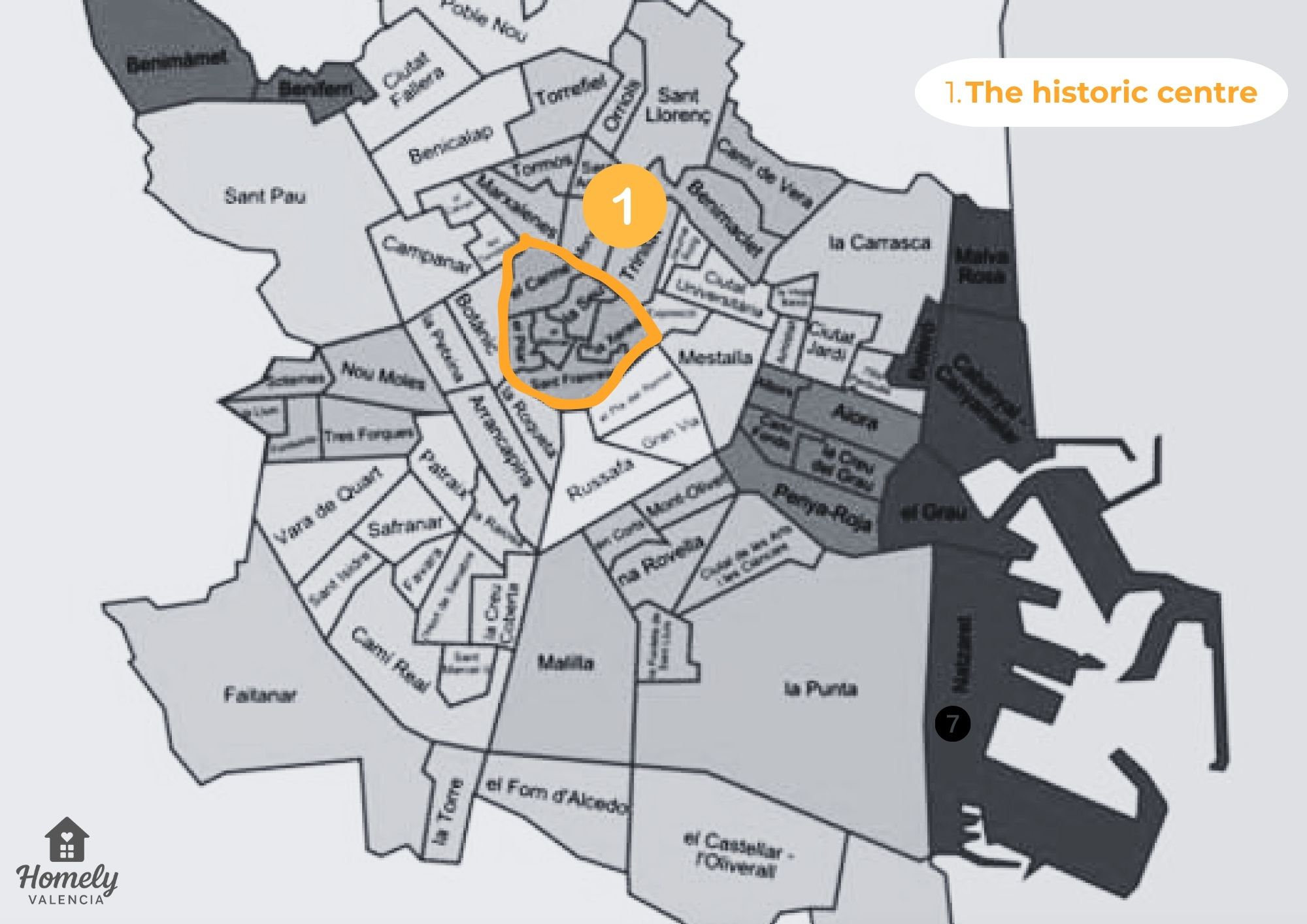
The historic centre, including Ciutat Vella, El Carmen, and La Xerea, is usually the first area buyers encounter. It delivers exactly what people expect from a Mediterranean city: narrow streets, historic facades, and a strong sense of place. It is also one of the most complex areas from a property perspective.
Buildings here are older and often come with structural limitations. Low natural light is common, lifts are not always present, and layouts can be irregular. Noise is also a constant factor, especially in streets with a strong tourism or nightlife presence. These are not minor inconveniences. They directly affect both livability and long-term value.
In 2026, the margin for error in the historic centre is smaller than it used to be. Two apartments in the same building can perform very differently depending on orientation, renovation quality, and the condition of the community. Location alone is no longer enough to justify a purchase here.
For lifestyle buyers, the area can still work very well. For investors, however, value is concentrated in very specific pockets and well-renovated buildings, rather than across the district as a whole.
2. Lifestyle districts: high demand & pricing pressure
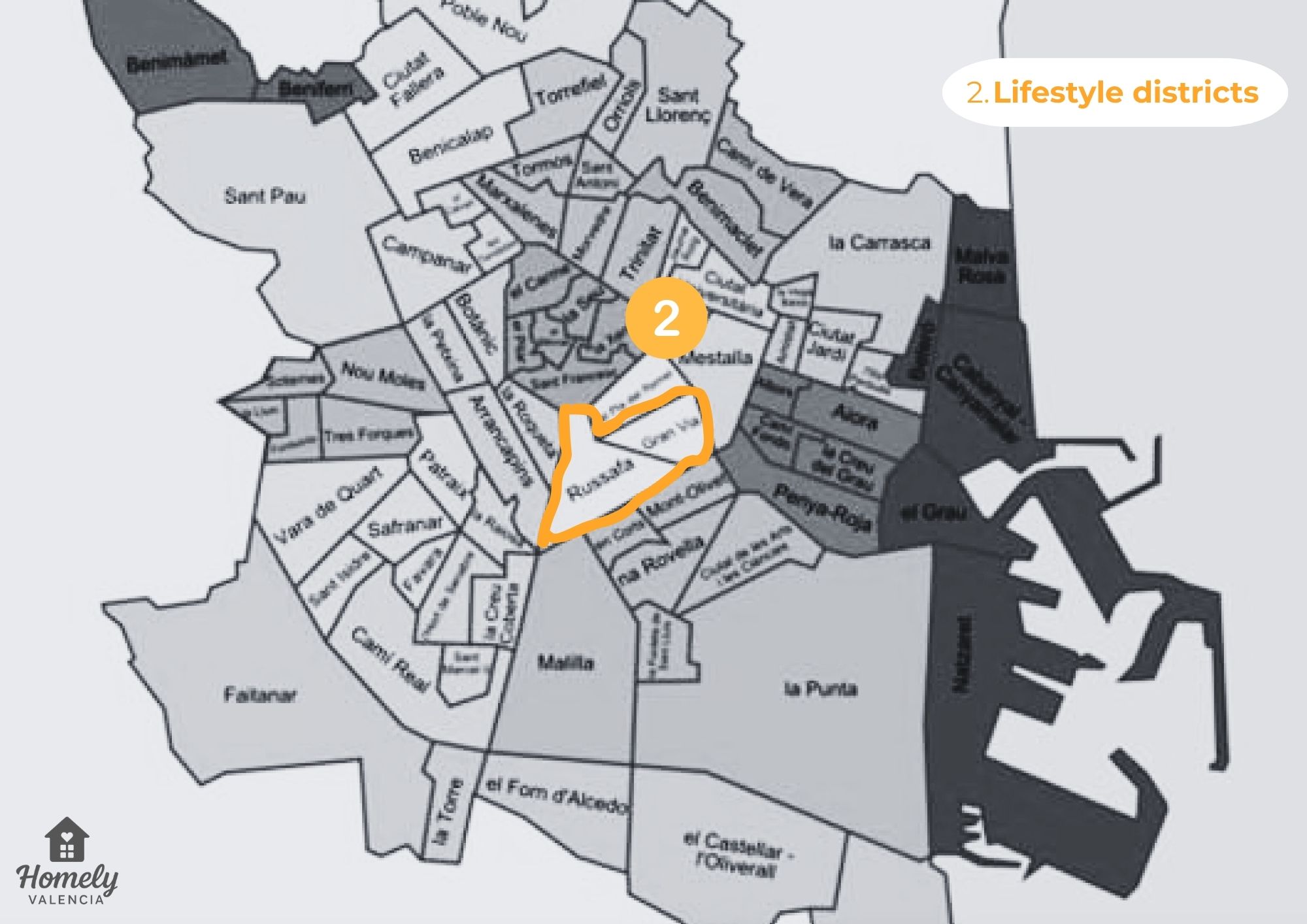
Ruzafa & Gran Via, within L’Eixample, have become the default reference point for expats. It is where most international buyers begin their search, particularly those looking for renovated apartments with original features and a central location.
The appeal is immediate. Everything is within walking distance, the area is active throughout the week, and rental demand is consistently strong. This combination makes it one of the most liquid parts of the Valencia property market.
The challenge is that this demand is already reflected in pricing. By 2026, Ruzafa is no longer an emerging area. It is a mature, highly visible part of the market where buyers are paying a premium for convenience and lifestyle.
Many buildings still require structural upgrades, and issues such as noise, insulation, and ageing infrastructure remain common, even at higher price points. This creates a situation where the headline location is strong, but the underlying asset may not always justify the price.
For lifestyle buyers, this trade-off is often acceptable. For investors, it requires more discipline. Returns tend to be tighter, and performance depends heavily on buying well rather than simply buying in the right area.
3. Coastal living: demand with uneven consistency
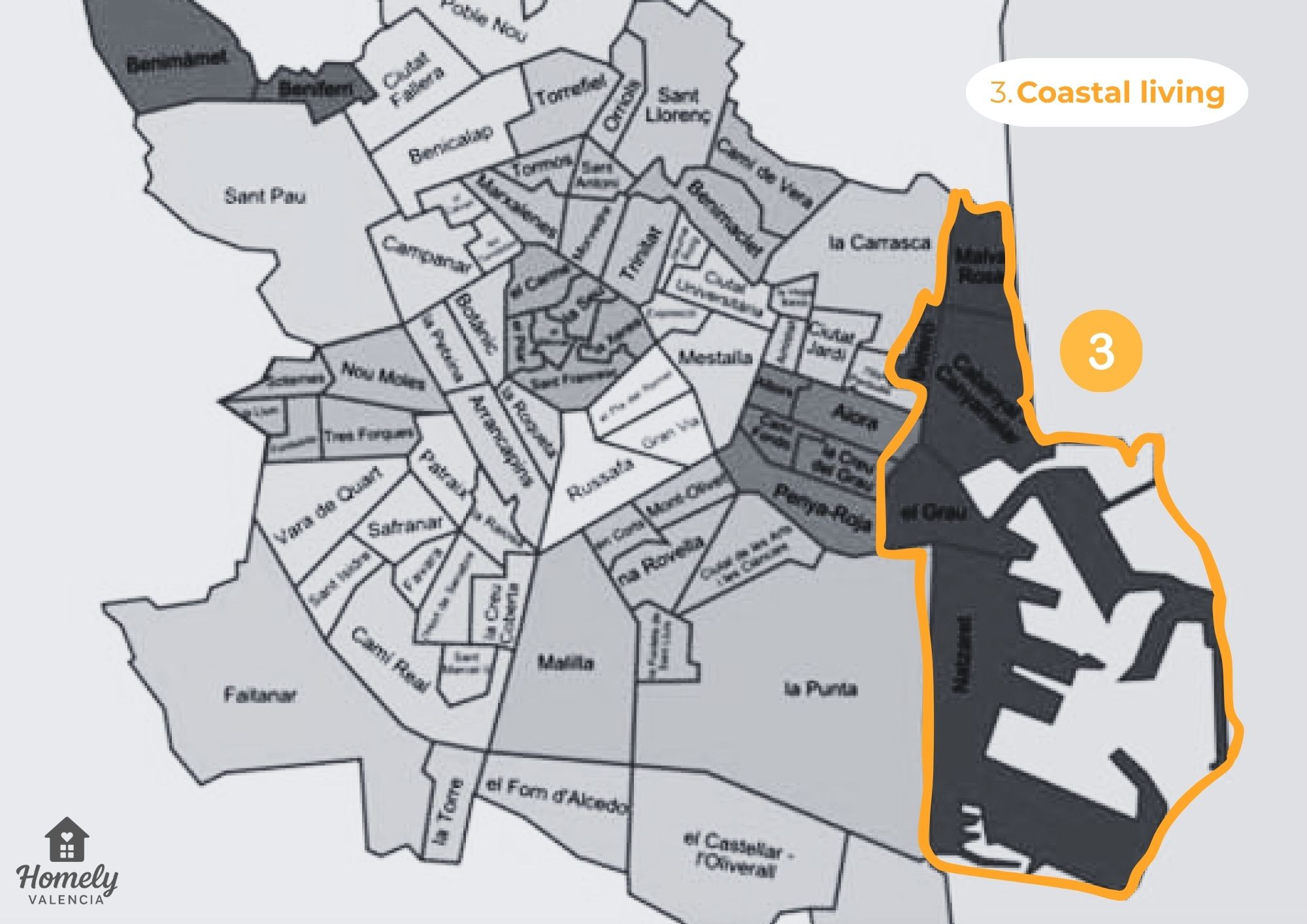
Valencia’s coastal districts, including Malvarrosa, El Cabanyal, El Grau, and Natzaret, attract buyers looking for proximity to the sea. This is one of the city’s main advantages, but it comes with a structural nuance. The beach is not integrated into the historic centre, which means coastal living and central living are two distinct experiences.
The variation across these areas is significant. Some streets have undergone substantial improvement, while others remain in transition or largely unchanged and this directly impacts both pricing and rental performance.
El Cabanyal has seen the most visible change in recent years. Parts of the neighbourhood now offer a strong mix of renovated homes, independent cafés, and local restaurants, which has increased its appeal. At the same time, this progress is uneven. Well-established streets can sit next to areas that still require time and investment, making selection critical.
Malvarrosa is often perceived as the more stable coastal option, but this also needs to be qualified. While it offers more consistent apartment blocks and clearer rental demand, it still includes pockets of older, lower-quality housing, which affects overall uniformity.
El Grau sits somewhere in between, influenced by its proximity to the marina and ongoing infrastructure improvements. Its position between the city centre and the coast gives it long-term relevance, but demand and pricing still vary depending on the exact micro-location.
Natzaret is emerging as a secondary coastal option. Its proximity to the port, new transport links, and ongoing urban upgrades are starting to attract attention, particularly from buyers looking for entry-level pricing near the sea. However, it remains an early-stage market, and long-term performance will depend on how these regeneration plans materialise.
In coastal Valencia, micro-location matters more than district name. Buyers who treat the area as a single market often underestimate the differences that exist within it.
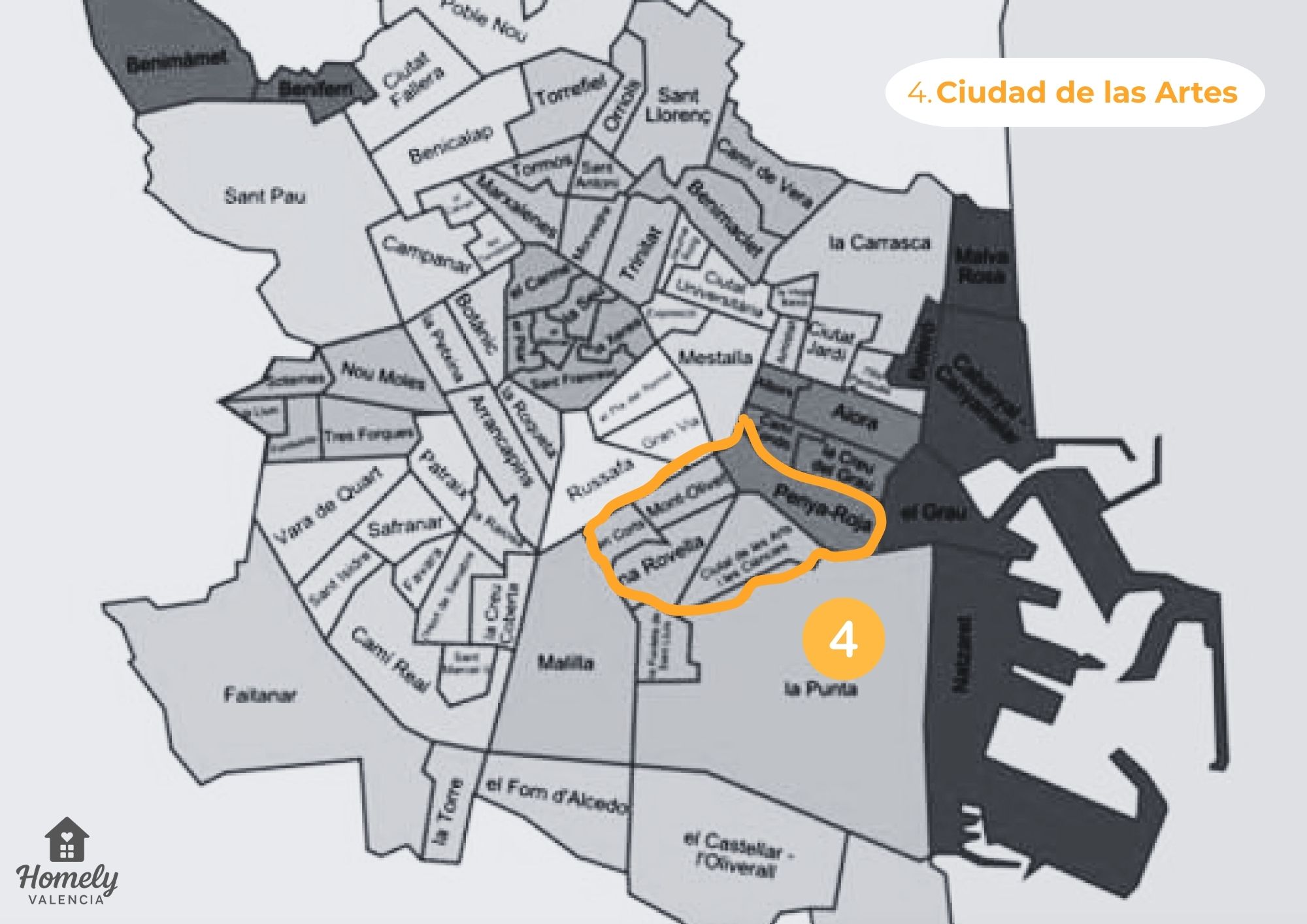
4. Ciudad de las Artes (Penya Roja, En Corts)
Another area worth highlighting is the zone around the Ciudad de las Artes y las Ciencias, which has become increasingly relevant for both families and international buyers.
On one side, areas such as Peña Roja and La Alameda offer more established residential buildings, often with larger apartments, concierge services, and in some cases communal facilities such as pools and gardens, as well as direct proximity to the Turia Park. These properties tend to attract buyers looking for space and a more residential feel while still remaining close to the centre.
On the other side, closer to the future Roig Arena in Quatre Carreres (En Corts), newer developments are reshaping the area. These are typically modern apartment blocks with underground parking, energy-efficient construction, and shared amenities, designed for ease of ownership and lower maintenance. In recent projects, top-floor units and penthouses command a significant premium, often reaching some of the highest price points in this part of the city. These two sides of the area behave differently in terms of pricing, building typology, and buyer profile
This part of Valencia sits between the city centre and the sea, which gives it a balanced position. It combines accessibility, green space, and newer housing stock, making it one of the more practical choices for buyers who want a compromise between lifestyle and functionality. At the same time, pricing has increased in recent years, and the gap between standard units and premium properties has widened, so selection and building quality remain critical.
5. Northern residential areas: family focus
For families, the decision process shifts away from lifestyle and towards practicality. Space, schools, and stability become the main priorities. This is why many international buyers focus on areas north of Valencia, such as Rocafort and Poblats Nord.
These locations offer larger properties, quieter environments, and proximity to international schools, which are concentrated in this part of the metropolitan area. The overall atmosphere is more residential, and demand tends to be driven by long-term residents rather than short-term trends.
The 2024 flooding has reinforced this pattern. While the risk differences across the city are nuanced, northern areas are often perceived as more stable, which has increased their appeal among relocating families.
The trade-off is clear. These areas are less walkable and often require a car. They function more as suburban residential zones than as part of the urban core.
6. New build zones: modern housing and expansion
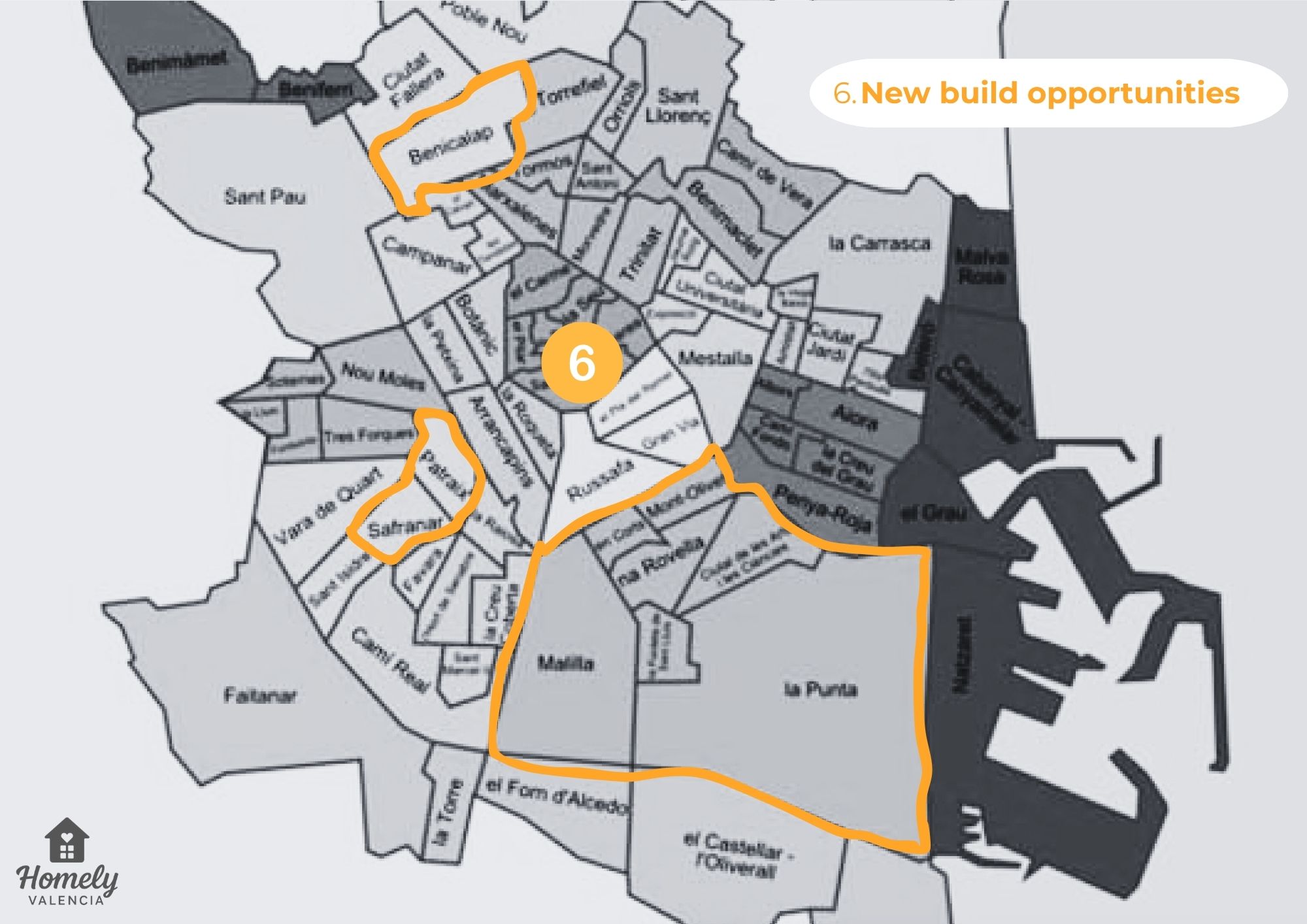
Valencia’s recent expansion is concentrated in districts such as Quatre Carreres, Patraix, and Benicalap. These areas are increasingly relevant for buyers who want to avoid the uncertainty that comes with older housing stock.
The appeal of new build properties is straightforward. Modern layouts, energy efficiency, lifts, parking, and predictable maintenance costs make ownership easier, particularly for international buyers who are not based locally. In addition, many newer developments now include shared amenities such as swimming pools, co-working spaces, gyms, and communal terraces, which further increase their appeal for both end-users and tenants.
At the same time, these districts lack the architectural character of older parts of Valencia. They are more functional in design, with wider streets and newer infrastructure. For some buyers, this is an advantage. For others, it feels less connected to the identity of the city.
From a market perspective, demand for new build properties remains strong, while supply is still relatively limited. This has had a direct impact on pricing. Since 2022, new build prices in Valencia have increased by around 60%, driven largely by rising construction costs and limited land availability.
As a result, entry prices are no longer low. A typical starting point for a two-bedroom new build apartment in a decent, non-peripheral location is now around €300,000–€320,000, with higher prices in more established or better-connected areas. On top of this, buyers need to factor in additional purchase costs, particularly VAT (IVA at 10%), stamp duty (AJD), and legal fees, which can increase the total acquisition cost by roughly 12–14%.
This combination of strong demand, rising costs, and constrained supply continues to support pricing, even in districts that are still developing.
7. Investors districts: where pricing still makes sense
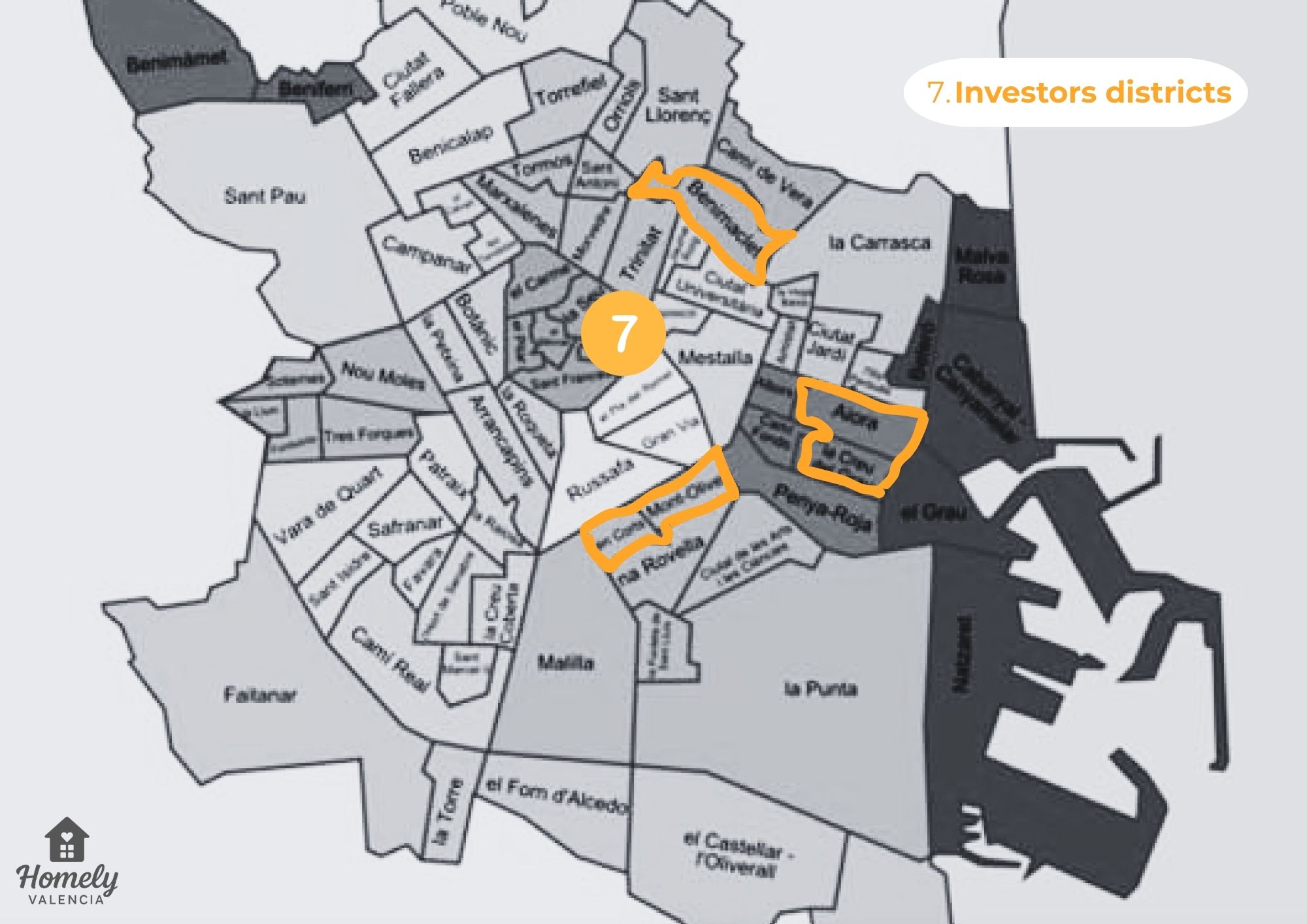
As central areas have become more expensive, investor focus has shifted toward districts where entry prices are lower but rental demand remains stable. Areas such as Patraix, Benimaclet, Aiora, la Creu de Grau, en Corts and Monteolivete fall into this category.
These are not lifestyle-driven locations. They are functional, local markets where demand comes from residents, students, and professionals, rather than international buyers. This often results in more stable occupancy and less exposure to market cycles driven by external demand. Vacancy risk is generally lower, but tenant profiles are more price-sensitive.
The key difference is that here, buyers are not paying for image or visibility. They are paying for utility and demand fundamentals, which is why yields tend to be stronger when properties are selected correctly.
8. Houses in Valencia: why you need to look beyond the metropolitan area
Buyers looking for houses rather than apartments typically move outside Valencia city. Areas such as La Eliana and Bétera offer detached homes, outdoor space, and established expat communities.
These locations provide a different lifestyle. Space and privacy increase, but daily life becomes more dependent on a car or metro, and access to the city is less immediate.
Following the 2024 flooding, buyers have also become more attentive to infrastructure and accessibility. Ease of access during extreme weather conditions is now part of the decision-making process, particularly in more dispersed residential areas.
For families, this trade-off often makes sense. For buyers looking to experience Valencia as an urban environment, it usually does not.
Conclusion
Valencia is compact, but it is not uniform. The fact that the city is located by the sea, yet organised away from it, creates a structure that is not immediately obvious to new buyers. The Turia Park reinforces this by dividing the city into areas with distinct characteristics.
Recent events, such as the 2024 flooding, have added another layer to how location is evaluated, particularly for international buyers. What used to be a lifestyle decision is now also a question of infrastructure and resilience.
Central areas offer liquidity but require careful selection. Coastal districts provide lifestyle but come with variability. Northern zones are driven by family demand, while newer districts offer predictability. Investor areas remain where pricing is still relatively rational.
There is no single best neighbourhood. In practice, most buyers end up choosing between convenience, space, and long-term value, rather than maximising all three.
Looking for more than just a house? Whether you're relocating or investing, book a consultation with Homely to get a clear and structured view of the Valencia market.
FAQ
What is the best neighborhood in Valencia for expats in 2026?
Ruzafa and Eixample are the most popular due to lifestyle and central location. However, areas like Camins al Grau or Patraix often offer better value while remaining well connected.
Where should families live in Valencia?
Most international families tend to choose areas close to international schools, particularly in the north of the city, such as Rocafort and Poblats Nord, or outside the metropolitan area in places like La Eliana. These locations offer quieter residential environments, larger properties, and better access to international schooling, making them more suitable for long-term family living.
Is Valencia city affected by flooding?
The city centre and most central districts were not affected by the 2024 flooding. However, parts of the southern metropolitan area were impacted, which has made buyers more cautious about infrastructure and location.
Are coastal areas a good investment?
They can be, but performance varies significantly between streets. Careful selection is essential.
Are property prices still rising in Valencia?
Yes. Growth has slowed compared to previous years, but prices are still increasing at a moderate pace, supported by strong demand and limited supply.